BREAKING
ViralX Has Gone Completely Insane Over UsePaid Money — But What Is Actually Happening?Trending NowOpenAI’s Agents Didn’t Stop at Australia — They Started Finding Their Own Way Around the RulesPolitics & CultureWhite House Bars CNN From Air Force One as Fight Over Presidential Press Access EscalatesInternet DramaThe Door Kick Challenge Just Led to an Arrest in PhoenixTrending NowTaylor Swift Turns the Internet Into Her Latest EncoreX StoriesUnited Kingdom: Manchester United Fans Go After the MoneyX StoriesItaly: Grande Fratello VIP’s Simone Civil WarTrending NowSerbia: Vučić’s Resignation Chess MoveTravelAustria in Winter: Vienna, Salzburg, Hallstatt and InnsbruckTravelRome’s Colosseum Closes After 22-Year-Old Worker Dies in Fall
◌
--° Local weather
Loading date… · --:--
HomeTrendingX StoriesTech & AIEntertainmentTravel
TravelSep 24, 202611 min read207 views

Austria in Winter: Vienna, Salzburg, Hallstatt and Innsbruck

Austria in winter is far more than ski resorts and snowy villages. Start in Vienna, then follow the road west through Salzburg and Hallstatt before reaching Innsbruck and the Alps.
Austria in Winter: Vienna, Salzburg, Hallstatt and Innsbruck

Austria in winter is not simply about skiing, mountain resorts or finding a village buried under snow. There is another side to the country that is just as beautiful, and for many travelers it begins long before the first mountain appears on the horizon.

It begins in Vienna

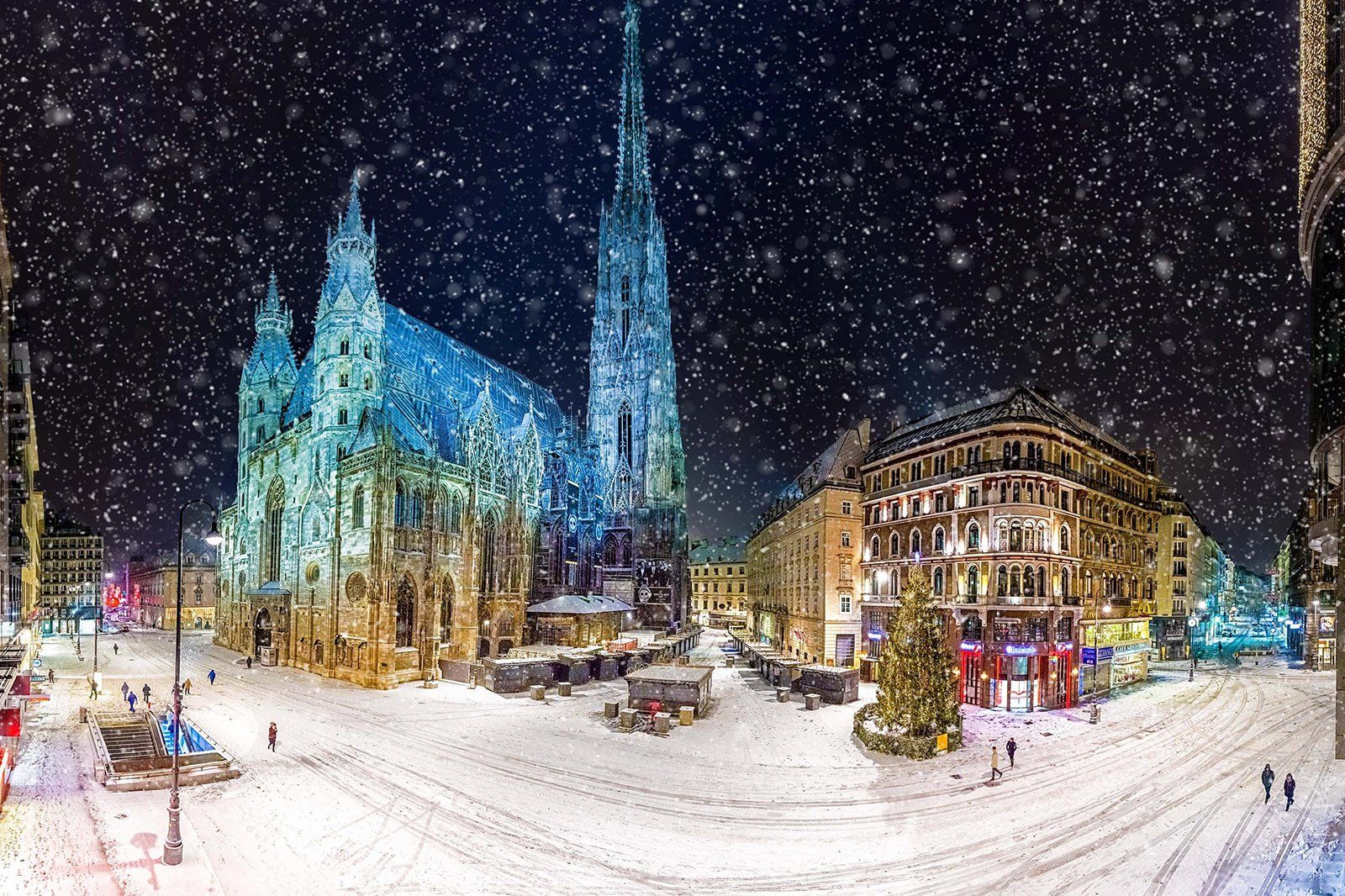
When temperatures fall and the days become shorter, Austria's capital changes its rhythm. The grand buildings around the Ringstrasse become more dramatic under a grey winter sky, the parks become quieter, the windows of traditional coffee houses glow against the cold streets, and the city begins to feel less like a place you are rushing through and more like somewhere you are supposed to experience slowly. In December, Christmas markets add another layer to the atmosphere, but Vienna does not lose its appeal when the Christmas lights disappear. Winter continues through January and February, bringing opera, museums, exhibitions, balls, concerts, cafés and long walks through a city that was built for exactly this kind of elegant indoor-outdoor lifestyle.
fa1ffc85dc448fe64f5aad880bde2b990ee63499 1600x1066
That is what makes Vienna such a good starting point for an Austrian winter journey. You can spend several days discovering the capital itself before heading west toward Salzburg, the lakeside setting of Hallstatt and eventually the mountains surrounding Innsbruck. The journey becomes a gradual change of scenery. First there is imperial Vienna, then the historic streets and mountains of Salzburg, then the extraordinary landscape around Hallstatt, and finally Innsbruck, where the Alps rise almost directly from the city.

Vienna in Winter: Where the Journey Should Begin

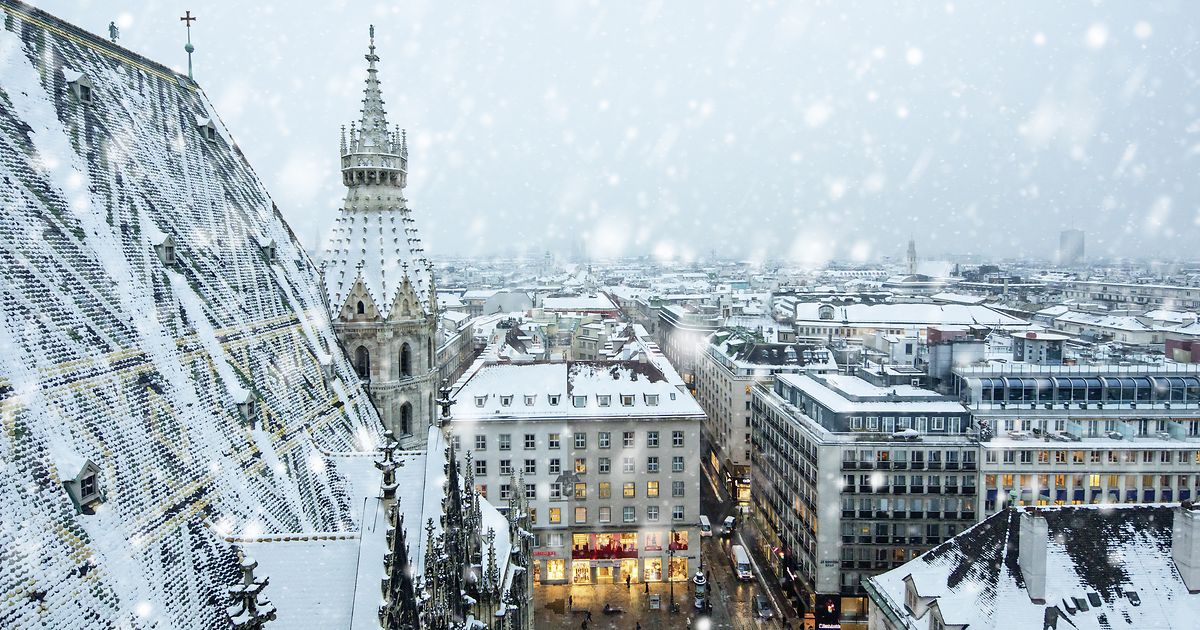
The first impression of Vienna in winter is architectural. This is a city of enormous buildings, formal squares and long perspectives, and winter light can make all of them feel even more imposing. Start in the historic centre around St. Stephen's Cathedral and simply walk. Stephansplatz leads naturally into the narrow streets around the cathedral, where old façades, small shops, restaurants and cafés create a completely different atmosphere from the monumental Ringstrasse. From here, Vienna opens up almost like a series of connected neighbourhoods.
Walk toward the Hofburg, the former imperial palace complex that sits at the heart of the city. In winter, the enormous courtyards and surrounding buildings can feel particularly atmospheric, especially when the streets are quiet in the early morning. The Hofburg is also a useful reminder that Vienna is not a city where history exists only behind museum glass. Much of the historic centre is the history.
powered_by
Continue toward the MuseumsQuartier and you arrive at one of the city's most important cultural areas. This is where a winter day becomes particularly easy to enjoy because Vienna gives you an almost ridiculous number of ways to escape the cold without sacrificing the experience of the city. You can spend hours inside the Kunsthistorisches Museum, one of Europe's great art museums, move on to the Albertina, explore exhibitions around the MuseumsQuartier or simply sit in a café with a coffee and watch the winter city through the window. And that last part is important. Vienna's coffee-house culture is not just something to tick off a travel list. In winter, it becomes part of the practical rhythm of visiting the city. After an hour or two outside, sitting down somewhere warm, ordering coffee and something sweet, and allowing yourself to stop for a while can feel like exactly what the city expects you to do. Vienna is at its best when you stop trying to see everything.

Schönbrunn in Winter

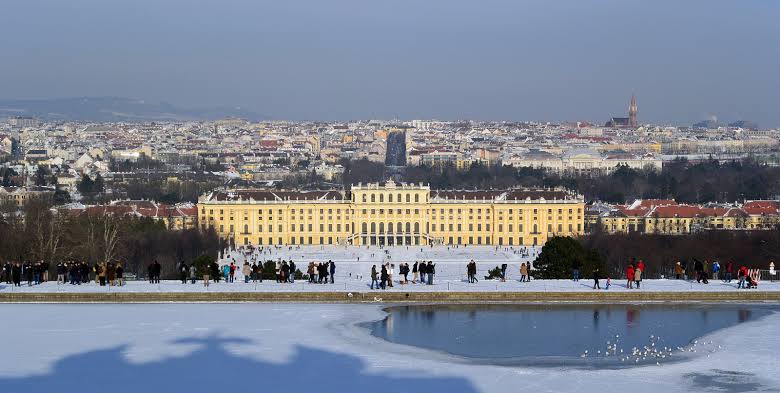
No first winter visit to Vienna would be complete without Schönbrunn Palace. The former imperial summer residence is one of the city's defining sights, but winter changes the experience of the enormous palace grounds. The formal gardens are quieter than during the warmer months, and the palace itself becomes an especially attractive destination when the weather is too cold for spending an entire day outdoors. The palace interiors tell one story, with their imperial rooms and Habsburg history. Outside, the gardens tell another.
images

That unpredictability is actually part of the winter experience. One day Vienna can be crisp, bright and dry. Another canbe grey and cold. Another might bring rain or a light snowfall that disappears almost as quickly as it arrived. Theimportant thing is that the city works in all of those conditions.
powered_by

Belvedere, the Ringstrasse and Vienna After Dark

Belvedere is another place where winter works particularly well. The palace complex is famous for its art collection, most notably Gustav Klimt's *The Kiss*, but the setting is almost as important as the paintings. The formal gardens connect the Upper and Lower Belvedere, and the view toward the city creates a very different perspective from Schönbrunn.
powered_by
Then there is the Ringstrasse. Rather than treating it as something to photograph once and move on from, walk sections of it. Vienna's grandest buildings line this historic boulevard, including the State Opera, Parliament, City Hall, Burgtheater and other monumental landmarks. Winter evenings can make this walk especially atmospheric. The buildings are illuminated, the streets become darker earlier, and the contrast between the cold outside and the warm interiors of restaurants, cafés, concert halls and bars becomes part of the experience.

A Different Kind of Winter in Vienna

There is a temptation to imagine a perfect Vienna winter as endless snowfall, horse-drawn carriages moving through white streets and every building covered in frost. The reality is more interesting.

Vienna does not reliably look like a Christmas postcard throughout the winter. Snow can happen, but it is not something visitors should assume will cover the city for weeks. What makes winter special is the combination of cold streets, illuminated architecture, museums, coffee houses, music, food and the feeling that there is always somewhere interesting to go next. If you happen to arrive during a snowy spell, the city becomes spectacular. If you do not, you still have Vienna. And that is exactly why the capital deserves several days rather than being treated simply as the airport through which you enter Austria.

Salzburg: From Imperial Vienna to the City of Mozart

Eventually, though, the city begins to change.Travel west from Vienna and the landscape gradually becomes more Alpine, and Salzburg feels like the natural next chapter. Salzburg is smaller and more intimate than Vienna, but it has its own sense of grandeur. The historic centre, the Salzach River and Hohensalzburg Fortress create a skyline that feels almost designed for winter photography, particularly when snow appears on the surrounding hills and mountains. The best way to experience Salzburg is to walk rather than rush between attractions.
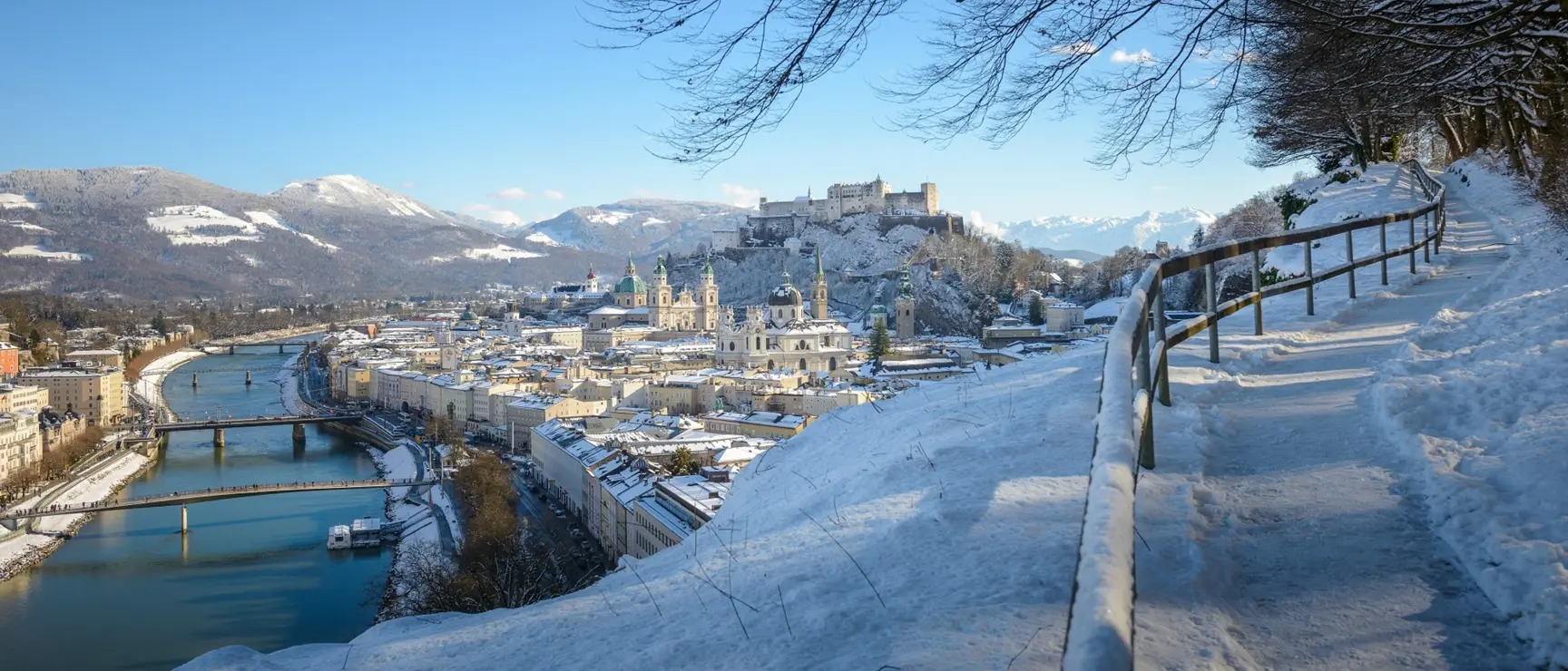
Begin in the Old Town and allow yourself to wander through its narrow streets. Explore the squares around the cathedral, look up at the Baroque façades, cross the Salzach and then turn back toward the historic centre. Above everything is Hohensalzburg Fortress. The fortress is one of Salzburg's defining landmarks, and winter gives the surrounding landscape a particularly strong atmosphere. From higher viewpoints, the city spreads out below while the mountains form the background. The official Salzburg tourism guide specifically highlights winter walks around the fortress and snow-covered Mönchsberg, along with the city's cultural and musical life.
Winter in Salzburg Tourismus Salzburg GmbH
But Salzburg is not only about looking at the mountains. This is Mozart's city, a place where music and culture remain part of everyday tourism rather than being treated as historical decoration. The museums, churches, concert venues and historic buildings give the city enough depth to fill several days even when the weather is cold. And winter itself has different personalities here. November and December bring the famous Christmas atmosphere, while January and February can feel much quieter. Salzburg's tourism board describes those later winter months as a period when the city can be experienced at a slower pace, with snowy walks, culture and fewer visitors. That quieter Salzburg may actually be the version many travelers enjoy most.

Hallstatt: The Landscape That Became an Icon

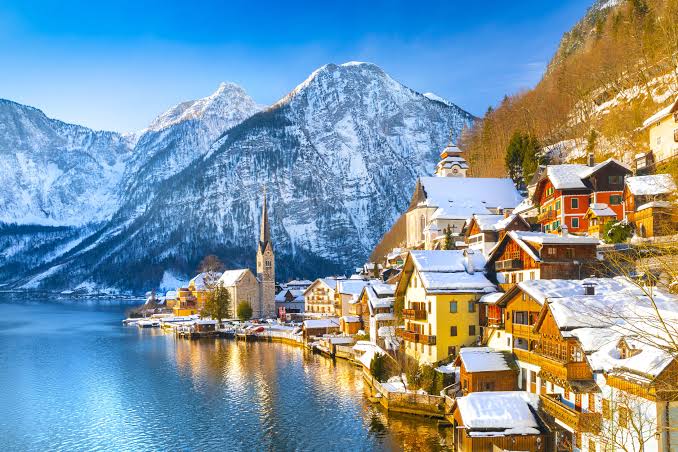
From Salzburg, the landscape becomes even more dramatic. Hallstatt is perhaps the most immediately recognizable destination on this route because the relationship between the village, the lake and the mountains is so visually distinctive. But rather than presenting it as another item on a list of “must-see villages,” it makes more sense to think of Hallstatt as a landscape experience.
images
The buildings sit between the lake and the steep mountains, leaving very little room for anything to feel ordinary. In winter, that geography becomes even more obvious. The mountains dominate the view. The lake can look almost completely still. The historic buildings appear compressed against the landscape, and when snow covers the surrounding slopes the whole place can feel separated from the rest of the world. This is also where it pays to slow down. Walk beside the lake. Explore the historic centre. Look across the water rather than constantly looking at your phone. Stop somewhere warm. Take photographs, but then put the camera away for a while.
Hallstatt has become famous because photographs make it look almost unreal. The interesting thing is that the real landscape does not need much help. For travelers starting in Vienna, Hallstatt can be incorporated through organized day trips, while travelers with more time can build it naturally into a wider Salzburg and Salzkammergut itinerary. The important question is not simply whether Hallstatt is worth visiting. It is how much time you want to give it. A quick visit gives you the famous view. More time gives you the atmosphere.

Innsbruck: Where the City Meets the Alps

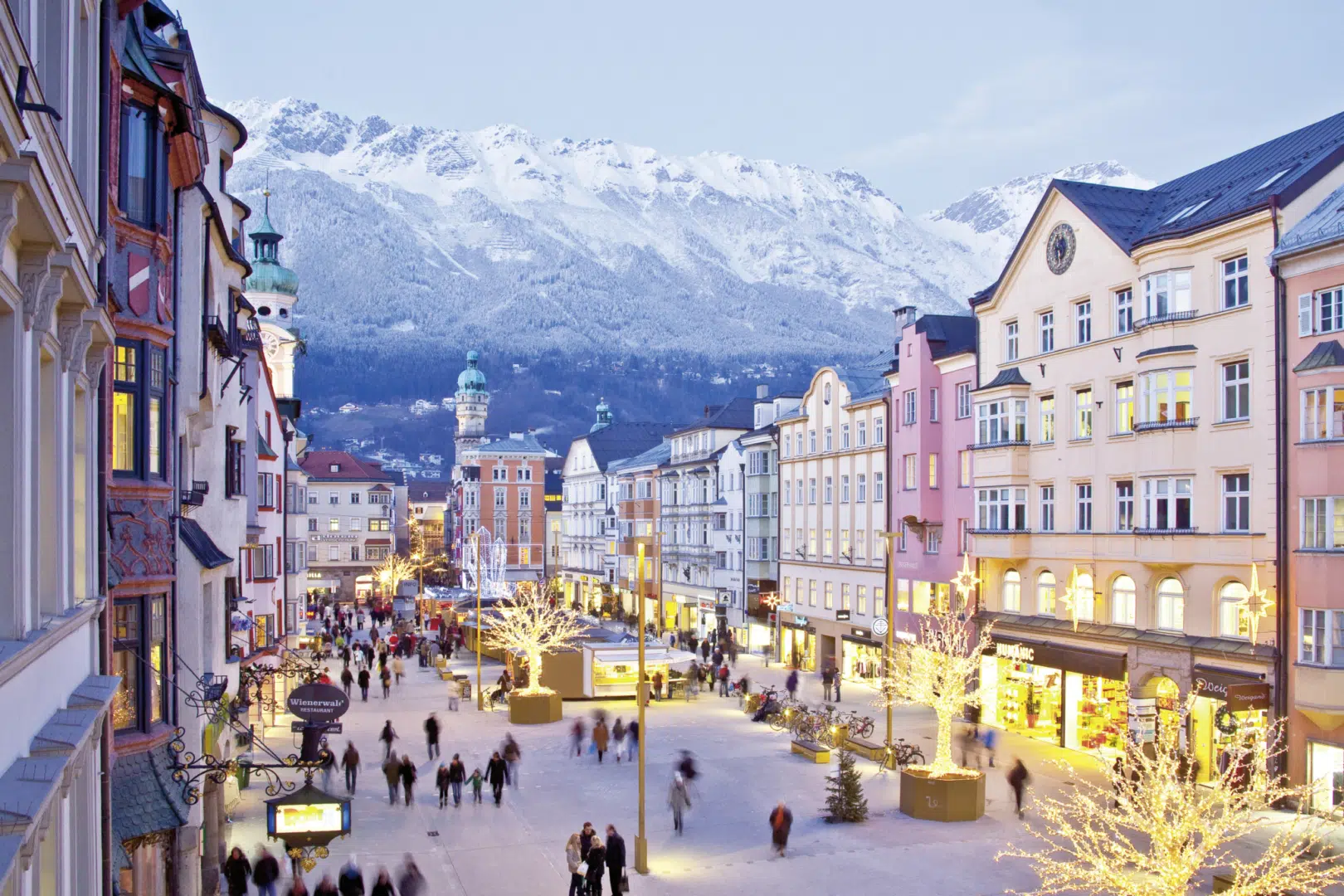
Then the character of the journey changes again. Innsbruck is not another version of Hallstatt, and it should not be presented that way. This is a genuine Alpine city, with a historic centre, museums, restaurants, shops and urban life surrounded by mountains. That combination is what makes Innsbruck special.
christkindlmarkt innsbruck berge jufa hotels scaled 1620x1080.jpg
You can stand in the Old Town beneath the Golden Roof and look toward the Nordkette. The mountains are not a distant background painted onto the horizon. They feel physically close to the city. And in winter, that relationship becomes even more dramatic. Innsbruck's official tourism information emphasizes exactly this contrast between medieval architecture, urban culture and the mountains, with the Nordkette accessible from the city centre and reaching around 2,300 metres above sea level. One of the most memorable things to do here is therefore not simply visit another museum or photograph another historic building. Go upward. The journey from the city toward the mountains can take you from streets and cafés to a completely different Alpine environment in a surprisingly short time. Depending on conditions, winter visitors can combine city sightseeing with mountain views, winter walks, skiing, tobogganing or simply spending time above the valley. And you do not have to be a skier to enjoy Innsbruck in winter. The region offers winter hiking, ice skating, tobogganing and other activities alongside its ski areas.
Back in the city, the experience becomes more relaxed again. Walk through the Old Town in the evening. Find a traditional Tyrolean restaurant. Try local food. Look toward the mountains as the light disappears. Innsbruck works because it gives you both versions of Austria at once: historic European city and high Alpine landscape.

Four Cities, Four Different Versions of Winter

What makes this route interesting is that none of these destinations is simply a smaller or larger version of the other. Vienna is the cultural beginning: imperial architecture, museums, palaces, coffee houses, music and the energy of a major European capital. Salzburg is more intimate, but its historic centre, fortress, music and mountain setting give it a completely different atmosphere. Hallstatt is about the relationship between human settlement and landscape — a small historic place surrounded by lake and mountains.
Innsbruck is where the mountains become part of the city itself. That makes the journey more interesting than simply collecting famous Austrian locations. You start in a capital where winter means museums, cafés, music and illuminated streets. You continue toward a city where mountains begin to dominate the horizon. Then you reach the lakes and mountains around Hallstatt. Finally, in Innsbruck, the Alps become impossible to ignore.

Planning an Austrian Winter Trip

The best itinerary depends on how much time you have. With three or four days, Vienna can easily take up most of the trip, with Salzburg or Hallstatt added as an excursion if you want to see more of Austria. With a week, the journey becomes much more comfortable. Spend several days in Vienna, continue toward Salzburg, give Hallstatt enough time to experience rather than simply photograph it, and then continue toward Innsbruck if the Alps are a major reason for the trip. And if you have even longer, there is no real reason to rush.
Winter is one of the seasons in which slow travel makes the most sense. A train journey through the Austrian countryside can become part of the holiday. A late breakfast can be better than another early attraction. A museum can save an afternoon when the weather turns unpleasant. A long dinner can be more memorable than another hour trying to photograph a landmark in the dark.
The biggest mistake would be trying to turn Austria into a checklist. Vienna deserves to be experienced as a city. Salzburg deserves time to wander. Hallstatt deserves more than a photograph. Innsbruck deserves time to look upward. And somewhere between all four, you begin to understand why Austria can be such a compelling winter destination. It is not simply the snow. It is what the country does with winter.