White House Bars CNN From Air Force One as Fight Over Presidential Press Access Escalates
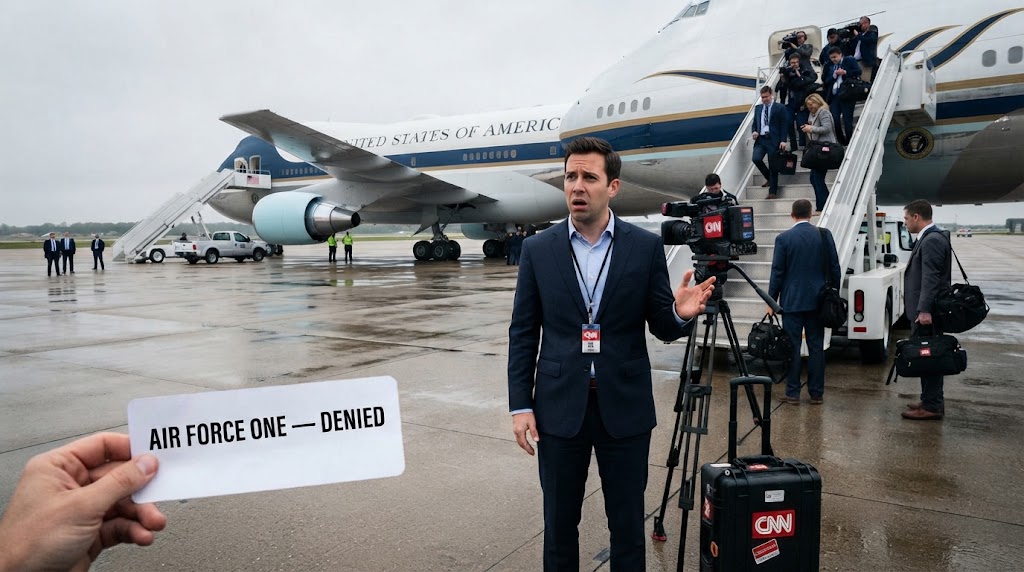
CNN has been left off the Air Force One press pool for Trump’s Tennessee trip, turning a limited seat on the presidential aircraft into the latest flashpoint in the escalating fight over media access to the White House.
United States — The dispute between the White House and the American press took another turn this week when CNN was excluded from the television press pool assigned to accompany President Donald Trump aboard Air Force One for his trip to Tennessee. The decision came only days after a federal judge ordered the administration to restore access to CNN, MS NOW and Politico, outlets that had been barred from the White House after Trump publicly attacked their coverage. CNN had been scheduled to participate in the rotating television pool, a system in which major networks take turns traveling with the president and producing footage that is then shared with the wider press corps.
The Air Force One pool is not simply a seat on a presidential aircraft. For decades, the limited space available to journalists traveling with the president has required major television networks to operate through a rotation system, allowing one network at a time to provide cameras and reporters whose footage can then be distributed to other organizations. CNN has described the arrangement as a shared resource rather than an exclusive privilege belonging to the network itself. When CNN was previously removed from pool assignments during the administration's confrontation with the network, other major television organizations also suspended their participation, leaving the president without the normal television pool coverage during several events.
The latest exclusion therefore arrives at a particularly sensitive moment. CNN had only recently been part of a wider legal and institutional confrontation over access to the White House. On September 21, CNN, MS NOW and Politico filed a federal lawsuit challenging the administration's restrictions, arguing that the government was retaliating against news organizations because of their coverage. Reuters reported that the White House defended its position by arguing that the outlets could continue reporting from outside the White House, while legal experts cited First Amendment and due-process concerns surrounding government restrictions based on the content or viewpoint of journalism.
The administration's position is that the president and the White House should not be required to provide the same level of access to organizations that they believe have repeatedly produced unfair or inaccurate coverage. From that perspective, access to presidential travel is not necessarily an entitlement attached permanently to a particular news organization. The White House has argued that journalists can continue covering the president without being granted every form of access, while the administration retains authority to determine how limited spaces and resources are allocated. That argument has become a central part of the broader dispute over what constitutes legitimate control of presidential access and what crosses the line into retaliation against unfavorable journalism.
Critics of the administration's approach see the situation differently. Their concern is not simply that CNN lost a seat on one flight, but that access to the president is being used as a mechanism for rewarding or excluding particular news organizations based on their coverage. Because the television pool exists precisely to share limited access and resources among competing networks, removing one organization can have consequences for the entire press corps rather than just the organization being targeted. CNN's own reporting has emphasized that when one network is assigned pool duty, its journalists are effectively working on behalf of the broader group because the resulting footage is distributed to other networks as well.
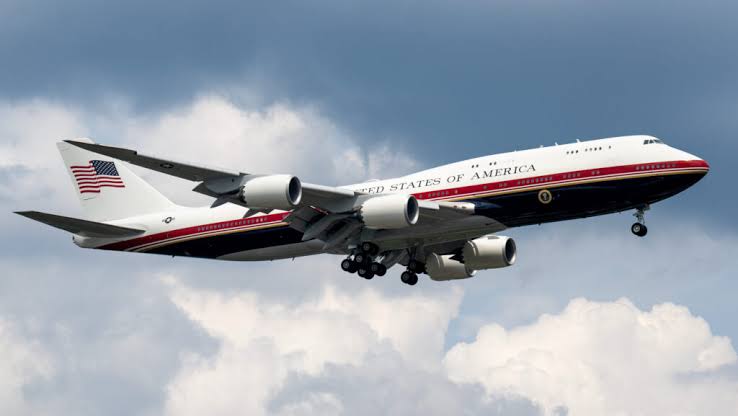
That distinction is what has made the phrase “Air Force One” resonate beyond the immediate story. The aircraft has become a symbol of the unusually close relationship between the presidency and the press corps that travels with it. Presidential reporters are given access to moments that cannot easily be recreated from outside, including conversations during travel, arrivals and departures, and the visual material that becomes part of the day's news cycle. At the same time, the space aboard the aircraft is inherently limited, which makes the pool system necessary and turns every decision over who occupies those seats into a question with consequences beyond one newsroom.
The timing has added another layer to the confrontation. CNN's exclusion followed the administration's earlier decision to bar CNN, MS NOW and Politico from White House grounds, a move Trump announced publicly while accusing the organizations of producing what he described as false or misleading coverage. The affected organizations rejected those accusations and challenged the restrictions in court. A federal judge subsequently ordered their access restored, but the dispute over the precise meaning of that access has continued, with the Air Force One decision demonstrating that being permitted back onto White House grounds does not necessarily mean every form of presidential access has returned to the previous arrangement.
The situation also illustrates why the modern White House press pool is more complicated than the familiar image of reporters simply following the president. There are different levels of access, including credentials for entering the White House complex, access to briefings and events, and participation in the rotating pool responsible for covering the president's movements. CNN's journalists have previously explained that the pool system has existed because the physical limitations of presidential travel make it impossible for every organization to send its own full television operation everywhere the president goes. The system therefore depends on cooperation between organizations that are often fierce competitors everywhere else.
For now, the fight is continuing on both legal and practical fronts. The courts will determine how the administration's broader restrictions on the three news organizations fit within constitutional protections, while the White House continues to control the practical details of presidential access. CNN's removal from the Tennessee trip shows that the argument is no longer confined to a White House press badge or a briefing-room seat. It has reached the presidential aircraft itself, turning a limited pool assignment into another test of how much control an administration can exercise over the journalists who cover the president.
And that is why Air Force One has become the unexpected shorthand for a much larger argument. The aircraft is physically carrying the president, but the fight surrounding the seats inside it is really about who gets to witness, record and distribute what happens around the presidency. Whether those seats are treated primarily as limited logistical resources or as part of the public's ability to observe its elected government is now at the center of an increasingly bitter confrontation between the Trump administration and major American news organizations.
Make your next US trip count
Whether you're heading to Boston, Chicago, Las Vegas, Los Angeles, Miami, New Orleans, Orlando, San Diego or San Francisco, there’s a Go City pass designed to help you see more of the city in less time.
The Autumn Sale is only running for a limited time.